Analysis of a service package selection and creating a holistic solution
Role
UX/UI-designer, Facilitator, Service Designer
Content
Designing a survey prototype, Facilitation, Business Design
Year
2023
Summary
Tasked with improving Auntie’s service package selection, we benchmarked competitors, identifying shortcomings and communication issues. Through workshops and ideation, we prioritized cognitive accessibility, creating visualized customer journeys and a needs-based survey to reduce information overload. This survey, combined with revamped and new package ideas, provides a holistic solution, improving clarity and addressing competitive gaps. This project strengthened my holistic design approach, Figma skills, and sparked my interest in design systems and cognitive accessibility.
We were tasked with developing Auntie’s service package selection. Our goal was to benchmark the competitive field and the USPs of different companies in terms of available services as well as possible overlaps and shortcomings. Based on this research we would conceptualize how Auntie’s service package selection could be developed in the future.
We started the process by benchmarking competitors to find possible shortcomings compared to competing package selections. This together with a workshop carried out by my team mate worked as a way of understanding the overlaps, shortcomings and other possible issues with Auntie’s service package selection.
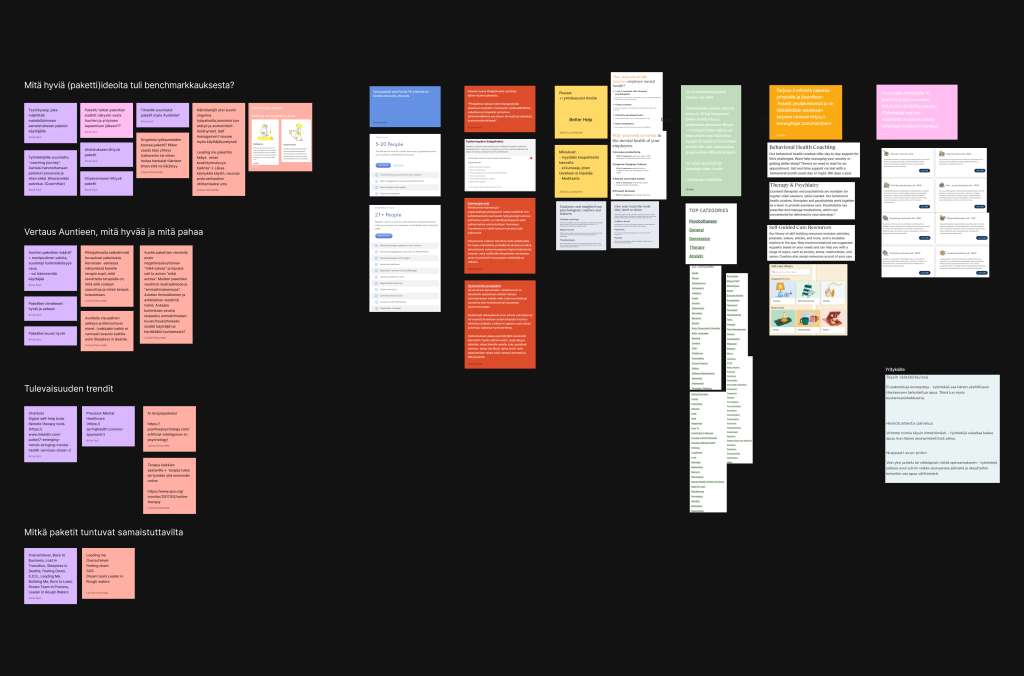
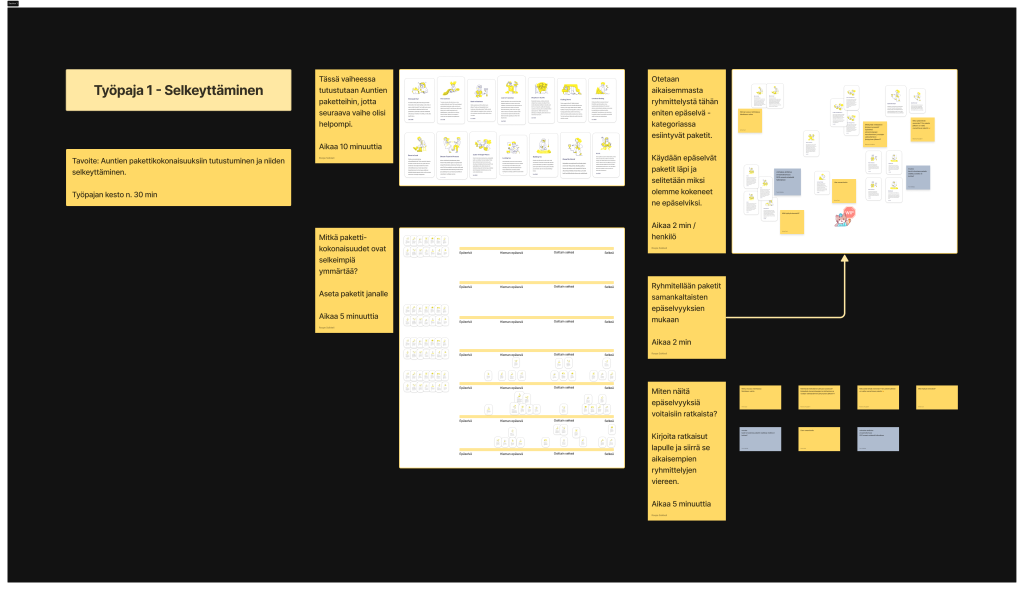
We quickly found out that the deeper issue beyond relatability was actually a need of clearer communication. I designed a workshop that was used for ideation of possible solutions. Our team realized that the customer would need a more holistic solution that would cover both their needs and the issues we found from multiple sides. As a team we decided that cognitive accessibility should be put as one of the main principles to highlight and follow during the whole process.
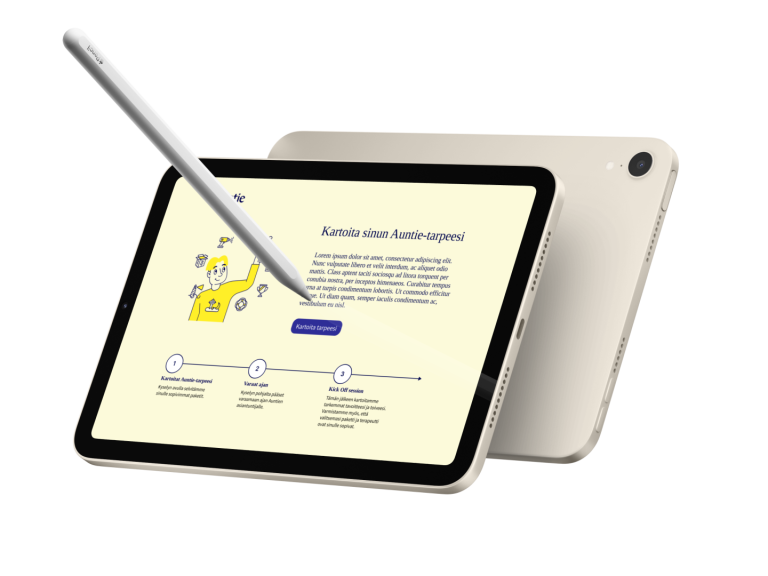
From our benchmarking we discovered that Auntie had used the visualization of customer journeys on their B2B side but there was a lack these on the end customer side. Visualizing customer journeys can help people with temporary or permanent cognitive impairments with their cognitive load while using a service. My and my team mates job was to couple this with the usage of a survey as a way of limiting the amount of information the end customer faces at one given time.
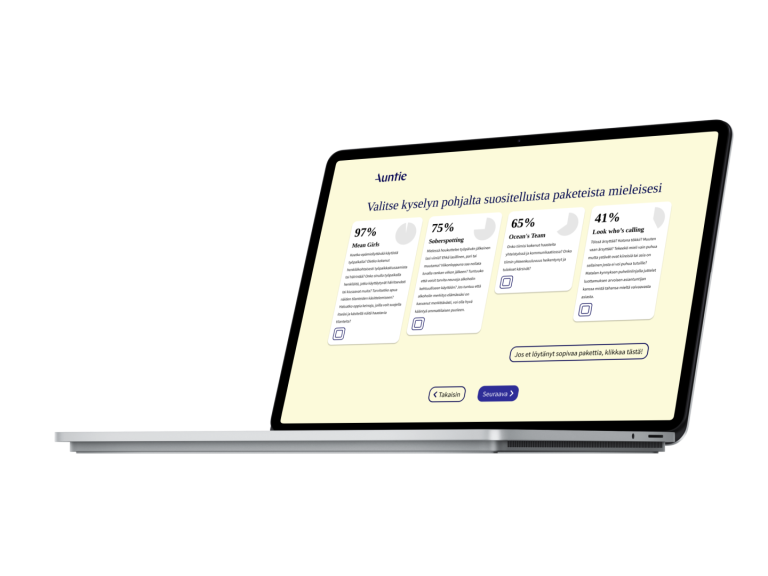
With rapid iteration and testing me and my team mate were quickly able to create the UX and UI for a prototype/minimum viable product of a survey that could be used to ease the end customers journey through-out the usage of Auntie’s service packages.
This survey would help the end customer to understand which packages from Auntie’s selection could possibly meet their needs without being bombarded by possibly irrelevant information.
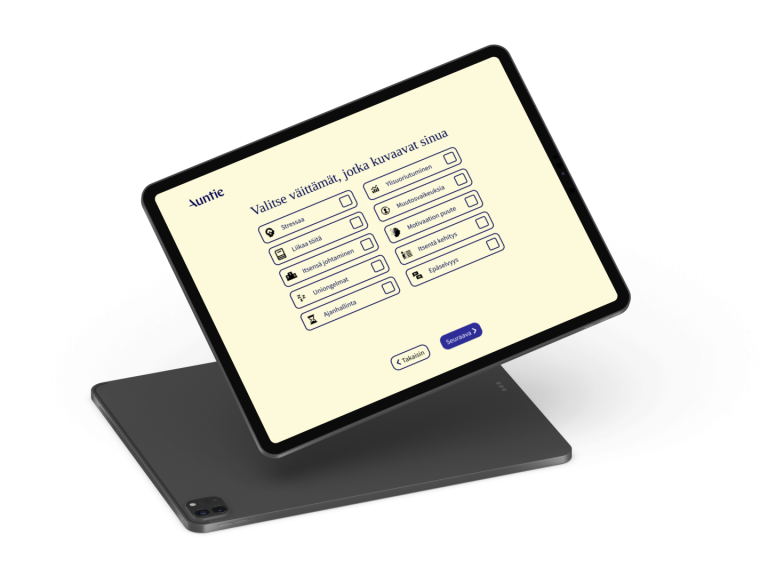
This survey was paired with the creation of new package ideas and the proposition of an overhaul of the existing packages carried out by our other team mates to create a holistic end solution to Auntie’s needs.
We revamped the old service packages to address issues with communications and clarity. We solved cognitive accessibility problems by creating a visual representation of the customer journey as well as a survey to reduce the amount of content presented to the customer at once. New package ideas were ideated to address the shortcomings when compared to demand and competitors.
I strive to create systematic and holistic solutions to the problems I need to solve. This project taught me a whole a lot about how I could design from the start with a holistic solution in mind. In this project I got to utilize my Figma component knowledge and skills and develop them further. This project is also what started my journey into learning more about design systems and the topic of cognitive accessibility.
Sorry, currently unavailable for new work!
